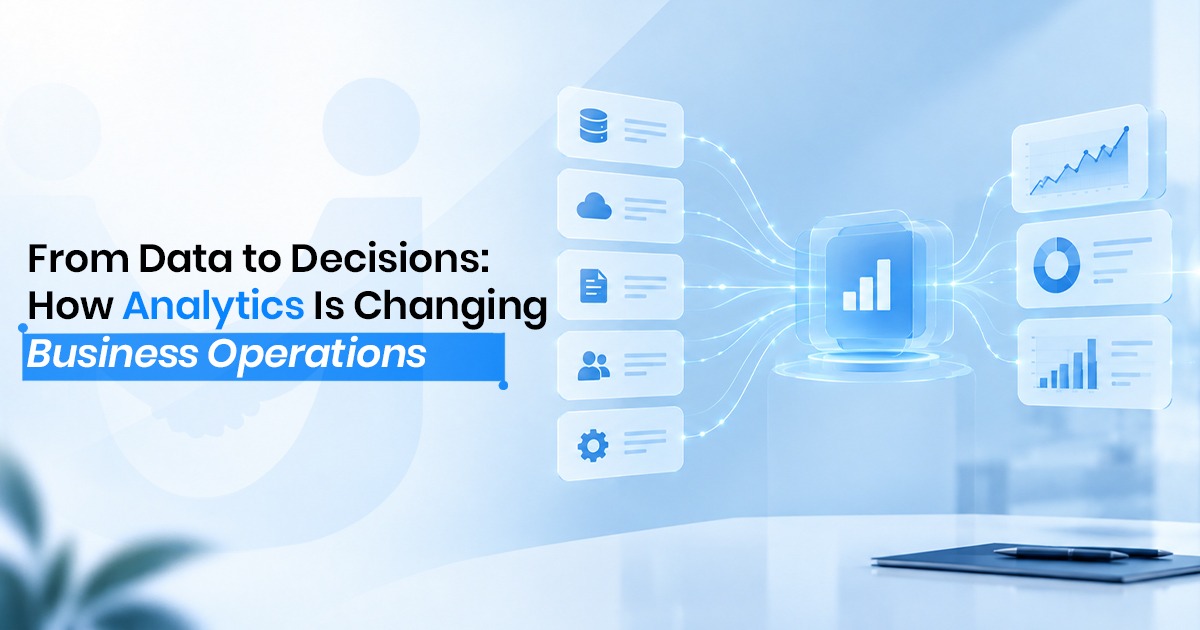
Every organisation generates large amounts of data on a daily basis. From customer interactions, sales transactions, invoices, operational activities, financial records, employee performances and digital interactions. And this pool of data information keeps on increasing with the increase in business.
However, the real advantages come when this collected data is turned into meaningful information and insights. Using this data, the management will make informed decisions. This is where business analytics is changing the way organisations operate.
From Information to Insight
Traditionally, business decisions often relied on experience, periodic reports, and information gathered from different departments. While these approaches still have value, the increasing volume and speed of business data have made it possible to understand operations in greater detail.
Data analytics allows organisations to examine information, identify patterns, and understand what is happening across different areas of the business.
Instead of simply asking, "What happened?", organisations can begin asking more meaningful questions: Why did it happen? What is changing? What could happen next? And what action should we take?
This shift is helping businesses move from reactive decision-making towards more informed and proactive approaches.
The Rise of Operational Analytics
One of the most practical applications of analytics is understanding day-to-day operations.
Operational analytics provides visibility into processes, performance, workloads, customer activity, and other operational metrics. When this information is available in a structured way, organisations can identify bottlenecks, monitor performance, and respond to emerging issues more quickly.
For example, a business may discover that a particular process consistently causes delays. Instead of relying on assumptions, managers can use operational data to understand where the problem occurs and determine how the process can be improved.
Analytics therefore becomes more than a reporting function. It becomes part of everyday operational management.
From Reports to Real-Time Analytics
Traditional reports often provide a snapshot of what has already happened. While useful, they may not provide enough visibility when organisations need to respond quickly.
Real-time analytics changes this by making current information available for faster monitoring and decision-making.
When leaders can see relevant operational indicators as they change, they can respond to issues sooner, allocate resources more effectively, and identify opportunities while they are still relevant.
This is particularly valuable in fast-moving business environments where waiting for the next reporting cycle may mean missing an opportunity or allowing a problem to grow.
The Role of Business Intelligence
Business intelligence brings data together to help decision-makers understand performance through dashboards, reports, visualisations, and key performance indicators.
The objective is not to overwhelm people with more information. It is to make important information easier to understand.
A well-designed analytics environment should help leaders identify what requires attention without having to navigate through multiple disconnected sources.
This is where the quality of data and the systems that generate it become increasingly important. If information remains fragmented across different platforms, creating a reliable view of business performance becomes more difficult.
Looking Ahead with Predictive Analytics
Analytics is also moving beyond understanding the present.
Predictive analytics uses historical and current data to identify patterns and estimate what may happen in the future. Organisations can use these insights to anticipate demand, identify potential risks, plan resources, and support strategic decisions.
Predictive analytics does not eliminate uncertainty. Instead, it provides another layer of information that can help organisations prepare for different possibilities.
Making Data Work for the Business
The future of analytics is not just about collecting data but converting it into meaningful information that would help businesses make informed decisions at the right time. It is all about making data useful.
For organisations, this means that collective systems are required to collect and connect information, creating accessible dashboards, improving the quality of the data and ensuring that the insights reach the right people who can act on them.
At IUI Solutions, we believe technology should help organisations move from information to action. Connected digital ecosystems and meaningful analytics can give businesses greater visibility into their operations and support more informed decision-making.
The organisations that create the most value from data will not necessarily be those with the most information. They will be the ones that can turn information into insight—and insight into action.
Data tells the story. Analytics helps organisations decide what to do next.