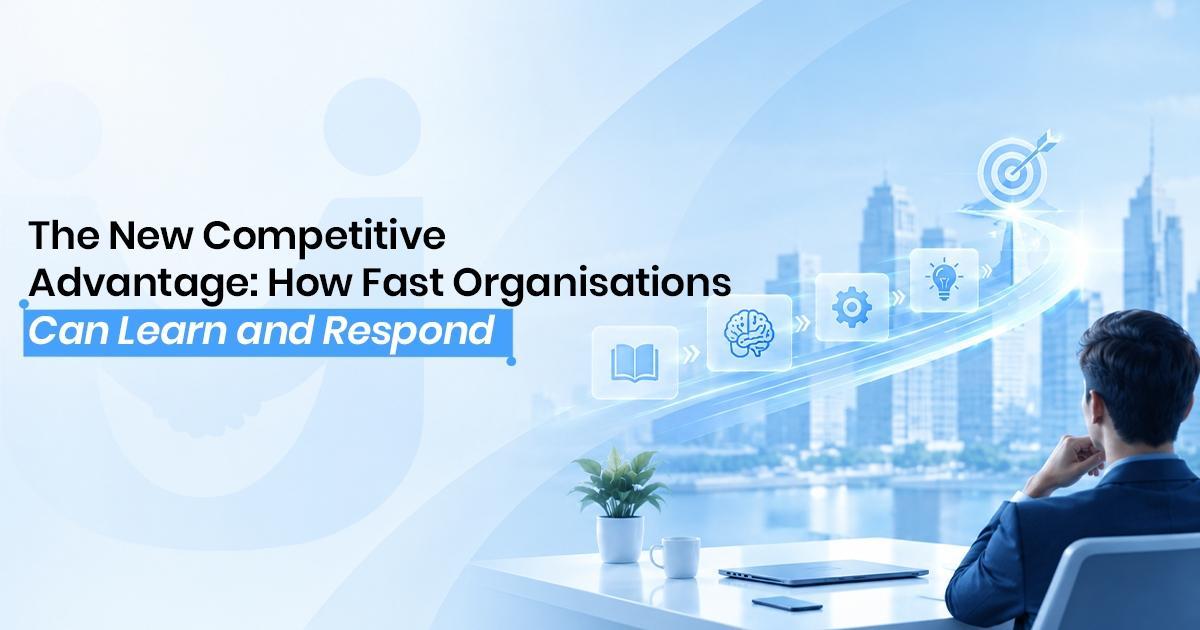
It is important for healthcare organisations to adapt evolving technologies. especially when their business environment is shaped around changing customer experiences and increasing competition. They should choose long term success over any short term goal. Organisations can no longer depend only on traditional decision making structures and established processes. They must continuously learn, respond to emerging challenges and refine their approach to remain in the competition.
This is where organisational agility becomes a strategic advantage. It lets the businesses recognise its real potential and help them make informed decisions. This also helps in translating insights into actions. More importantly, it helps them to build the resilience needed to navigate the uncertainty while identifying new opportunities to grow.
Understanding Organisational Agility
The ability to adapt strategies, processes and operations in response to the changing conditions of the business is called organisational agility. It is a combination of decision making, effective collaboration, continuous learning and ability to act.
Traditional operating systems often involve multiple layers of approvals, rigid workflows and disconnected information and departments. This may delay decisions and limit responsiveness.
Agile organisations, on the other hand, encourage collaboration, evaluate performance regularly, and remain open to improving existing processes. They view change not simply as a challenge but as an opportunity to learn and evolve.
Why Speed Alone Is Not Enough
Quick responses do not lead to better outcomes. A thinkthrough process is required to make the wise decision which is in favour and is aligned with the business goal. Decisions made without reliable sources and information may lead to challenges you might not have imagined. Issues like inefficiencies, increased cost etc. can occur.
True organisational responsiveness requires three essential capabilities: access to accurate information, faster and informed decision-making, and the ability to implement and evaluate changes. When these capabilities work together, organisations can respond with both speed and purpose.
Clear responsibilities, streamlined approval processes, and better coordination allow teams to address challenges without unnecessary delays. Regular performance reviews also help organisations understand whether their decisions are delivering the intended results.
Digital Transformation as an Enabler of Agility
Digital transformation plays an important role in helping organisations become more responsive. However, it involves more than adopting new technologies. It requires rethinking how information flows, how teams collaborate, and how everyday work is managed.
Connected systems improve visibility by bringing relevant information together and reducing silos between departments. This enables decision-makers to develop a clearer understanding of operational performance and identify areas that require attention.
Automation simplifies workflows by reducing repetitive manual tasks and unnecessary duplication. This allows employees to focus more on problem-solving, collaboration, and activities that require human judgement.
Data-driven insights support continuous learning. By analysing performance indicators and recurring operational patterns, organisations can identify bottlenecks, evaluate outcomes, and make informed adjustments.
Together, these capabilities help create a more connected and efficient operating environment where decisions can be translated into action more effectively.
Building a Culture of Continuous Learning
Technology alone cannot create an agile organisation. People and workplace culture must come together to build something meaningful. Healthcare organisations must encourage employees to share knowledge, provide feedback and collaborate with different departments. When teams understand the objective and work for a common goal, they can respond to challenges with greater confidence.
Leadership in any organisation is equally important. Because culture travels from top to bottom. Leaders who promote, motivate, empower teams, bring transparency and support new initiatives can reduce unnecessary delays and strengthen accountability.
Continuous learning also requires organisations to review their processes regularly. Instead of assuming that existing methods will always remain effective, teams should evaluate what works, identify what needs improvement, and adapt accordingly.
Measuring Organisational Responsiveness
To improve agility, organisations need to measure how effectively they respond to change. Indicators such as decision-making time, process completion rates, response time, and implementation of process improvements can provide useful insights.
These measurements help businesses identify inefficiencies and track progress over time. However, speed should not be the only measure of success. Accuracy, quality, customer experience, and accountability must remain central to every improvement initiative.
At IUI Solutions, we believe digital transformation creates the greatest value when technology helps people work more effectively, and organisations operate more efficiently. By simplifying workflows, strengthening operational visibility, and enabling informed decisions, organisations can build the foundation for sustainable growth.